
Conceptual to physical in one place
Move from business concepts to a deployable database schema without re-drawing anything or losing meaning along the way.
Model One connects business language, data flows and physical database design in a single workspace — so what you deliver in production is exactly what the business asked for.
Runs in your Azure tenant. No data leaves your environment.
Built for teams that take data seriously
Business stakeholders, data architects and engineers finally work from the same source of truth instead of three disconnected diagrams.
Move from business concepts to a deployable database schema without re-drawing anything or losing meaning along the way.
Multiple modelers work on the same project simultaneously, with live presence and safe locking on the elements being edited.
The dictionary keeps terms, definitions and data types consistent across every model, so a customer means a customer everywhere.
Show how data moves from source systems into your model — and link every flow back to the entities and attributes it carries.
The built-in assistant drafts entities, suggests attributes and answers questions with full context of your own project.
Role-based access, versioning and full change history make reviews straightforward and audits uneventful.
No technical background needed. Here is what Model One helps your team do every day — with OneAssistant, our built-in AI helper, always a question away.
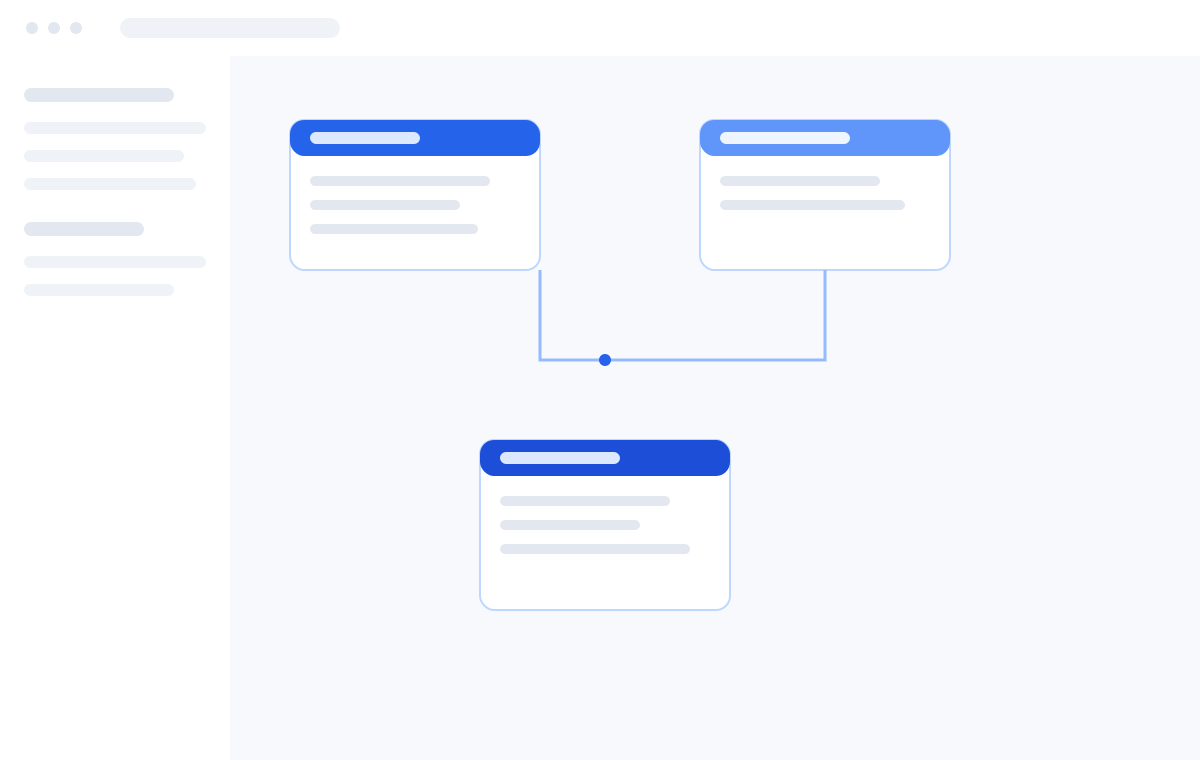
Draw a simple picture of the things your organisation cares about — customers, orders, products — and how they belong together. Everyone reads the same picture, so business and IT stop talking past each other.
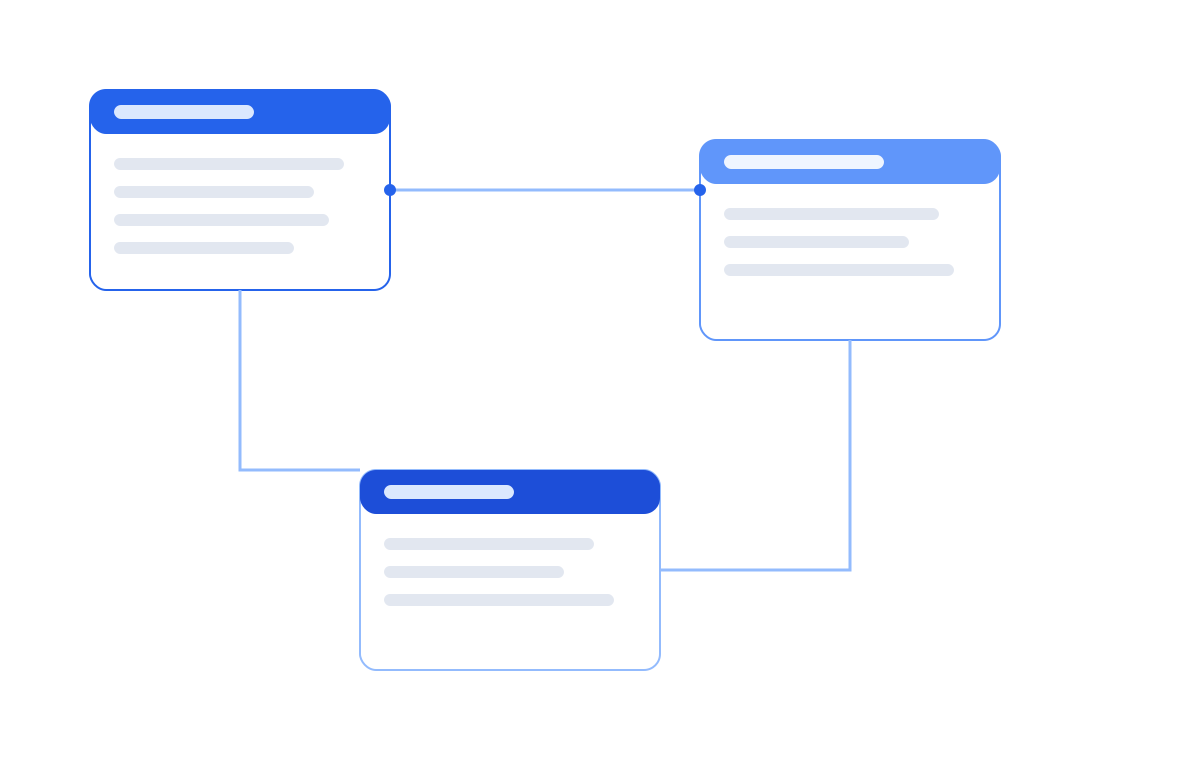
See at a glance which systems your information comes from, what happens to it on the way, and where it ends up. When something is about to change, you can see who and what it affects before it becomes a problem.
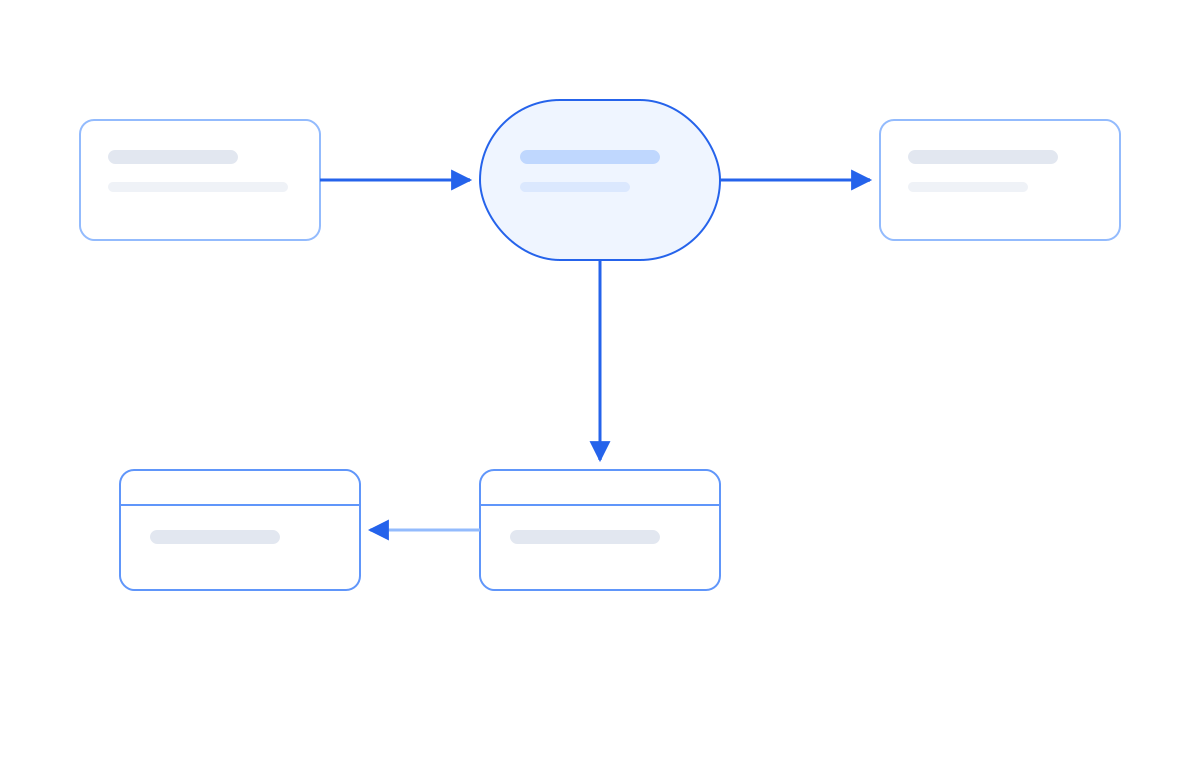
Once everyone is happy with the plan, Model One builds the technical version for your developers automatically. And when the plan changes later, it works out exactly what needs to change in the database you are already running.
Questions, decisions and to-dos live next to the part of the model they concern. You can see what is still open without chasing people over email or in a separate tool.
OneAssistant is the AI helper built into Model One. It already knows your project, so you can ask it what something means, have it draft a first version of a model for you, or check what a change would affect — in everyday words.
They are the reason Model One looks and behaves the way it does.
A data model is a communication tool first. If a business owner cannot read it, it has not done its job.
The best models come from architects, engineers and domain experts working in the same room — or the same canvas.
Control, history and review should be a natural by-product of doing the work, not a separate chore.
The assistant drafts and suggests. A human always reviews before anything enters the model.
What teams report after moving their modeling work into Model One.
From a first data warehouse to a governed enterprise landscape.
Agree on the target model before implementation starts, and keep the design document alive as the platform grows.
Give governance a visual, understandable backbone that business owners are actually willing to read and approve.
Document the legacy landscape, design the target and trace every entity from the old world to the new one.
Define clear, well-documented interfaces between domains so data products can be consumed with confidence.
Get a guided tour of Model One with your own modeling scenario, or start a trial in your own environment.